
The CDS Graduate Summer School offers a range of talks, covering a variety of topics across disciplines:
Decisions and the Mind
Decisions and AI
Decisions and Mental Health
Decisions and NeuroAI
Decisions and Evolution
Meet our Chairs
Our chairs come from a diverse range of academic disciplines and will each be leading their own days during the summer school, focused on their respective field of interest.

Gabriele Bellucci
Director of the Center for Decision Sciences

Anand Subramoney
Lecturer in Computer Science

Nura Sidarus
Lecturer in Cognitive Neuroscience
Talk Schedule
Monday
Carolina Feher da Silva, Reinforcement Learning: Model-Free or Muddled Models?

An influential theory in decision neuroscience posits a competition between a low-effort, “model-free” habit system and a complex, “model-based” goal-directed system. This talk presents behavioural and neuroimaging evidence that challenges this long-standing dual-system view, arguing that humans primarily use model-based inference when a task is properly understood.
We demonstrate that the widely-reported influence of model-free learning is likely an artefact of task misunderstanding. By providing clearer, story-based instructions for the classic two-stage task, we observe a dramatic shift to almost purely model-based choices. Crucially, this increase in correct model-based behaviour is accompanied by reduced mental effort and physiological markers of cognitive load, suggesting that standard abstract instructions promote a more cognitively costly, incorrect model-based approach rather than a less effortful model-free one. Furthermore, our neuroimaging analyses reveal that previous reports of combined model-free and model-based prediction errors in the ventral striatum are likely spurious, with more appropriate models showing no reliable evidence for a model-free signal.
These findings compel a re-evaluation of influential learning theories. We argue that what has been interpreted as low-effort, model-free behaviour may in fact reflect the higher cognitive cost of grappling with a misunderstood environment. This suggests the simple dichotomy between model-free and model-based systems is inadequate for explaining the complexities of human choice.
Matteo Lisi, Disentangling Bias and Noise in Human Confidence

Every choice we make in life is accompanied by a sense of confidence – a subjective feeling about how likely it is that we are choosing the best possible course of action. Importantly, confidence is not only used to critically re-evaluate past decisions but also plays a pivotal role in guiding future behaviour when outcomes are not immediately available.
In this talk, I will present a psychophysical ‘dual-decision’ method that allows us to assess the calibration of confidence, revealing systematic biases of over- and under-confidence. I will then show how this approach can be used to separate confidence errors into bias and noise, uncovering domain-specific patterns: under-confidence in perceptual tasks, but increased confidence noise in knowledge-based tasks. These results shed light on the computational constraints shaping human confidence.
Gabriele Bellucci, Computational Cognitive Modeling
Decision-making is a fundamental cognitive process that underpins behavior across domains—from neuroscience and psychology to artificial intelligence and economics. Here, I will introduce the range of computational formalism and methods that are currently used in the psychology, neuroscience, and cognitive sciences. These will include reinforcement learning, Bayesian methods, machine learning techniques, and neural networks. I will show in particular how these models have been applied to explain specific cognitive phenomena and understand their neural correlates.
Tuesday
Chris Watkins, Large Language Models (LLM)

Prof. Chris Watkins is a Professor at Royal Holloway. He is the inventor of Q-Learning, and an experts in Epidemiology and Evolutionary Theory.
This talk will provide an introduction to Large Language Models
Agnieszka Mensfelt, Agentic Artificial Intelligence

Dr Agnieszka Mensfelt is a Lecturer at Royal Holloway, University of London. Her research interests include agent-based modelling, evolutionary optimization, and game theory. She is one of the co-developers of the Framsticks simulation environment.
“Agentic AI” has recently become a popular term in discussions about the future of artificial intelligence, attracting interest from researchers, developers, and the public. But the idea of agents — systems that can sense, plan, and act in the world — is not new; it has been a central concept in AI, robotics, and cognitive science for decades.
This talk introduces the fundamental ideas behind agents, explains how modern “agentic AI” systems fit into this framework, and clarifies common misconceptions about what these systems can — and cannot — currently do. We will examine what it means for an AI system to be agentic, review examples of current agent architectures, and discuss major challenges such as aligning AI with human goals, making decisions under uncertainty, and ensuring long-term reliability. The goal is to equip students with a solid foundation for understanding and critically engaging with the rapidly evolving field of agentic AI.
Robin Schiewer, Reinforcement Learning

Dr. Robin Schiewer is a post-doctoral researcher at the University of Bielefeld, Germany.
This lecture introduces the principles of reinforcement learning and world models for sequential decision-making. Starting from the agent–environment interaction framework, the talk covers Markov and partially observable Markov decision processes, exploration versus exploitation, and fundamental reinforcement learning algorithms. It then explores world models as learned representations of environment dynamics that enable prediction, planning, and improved sample efficiency. By connecting classical reinforcement learning concepts with modern deep learning approaches, the lecture highlights how world models can help agents reason under uncertainty and learn more effectively in complex environments.
Wednesday
TBA, Social determinants of mental health
TBA.
Alex Pike, Computational psychiatry and mental health
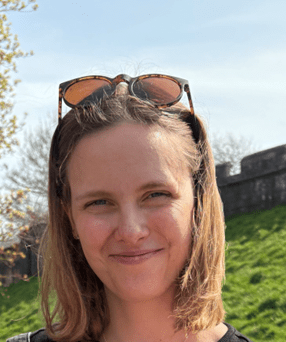
Computational psychiatry is a maturing field that focuses on applying computational models of learning and decision-making to mental health. In this talk, I will highlight some findings from my group that underlie the diverse ways that modelling can be used to gain a mechanistic understanding of mental health concerns, including a meta-analysis of reinforcement learning approaches to depression and anxiety.
However, this approach is not without limitations – so I will go on to present data that provides a specific test of some of the implicit assumptions we make as a field, which has somewhat alarming implications – but also some promising ones.
Alex Lloyd, Co-production and involvement of public and lived experience experts
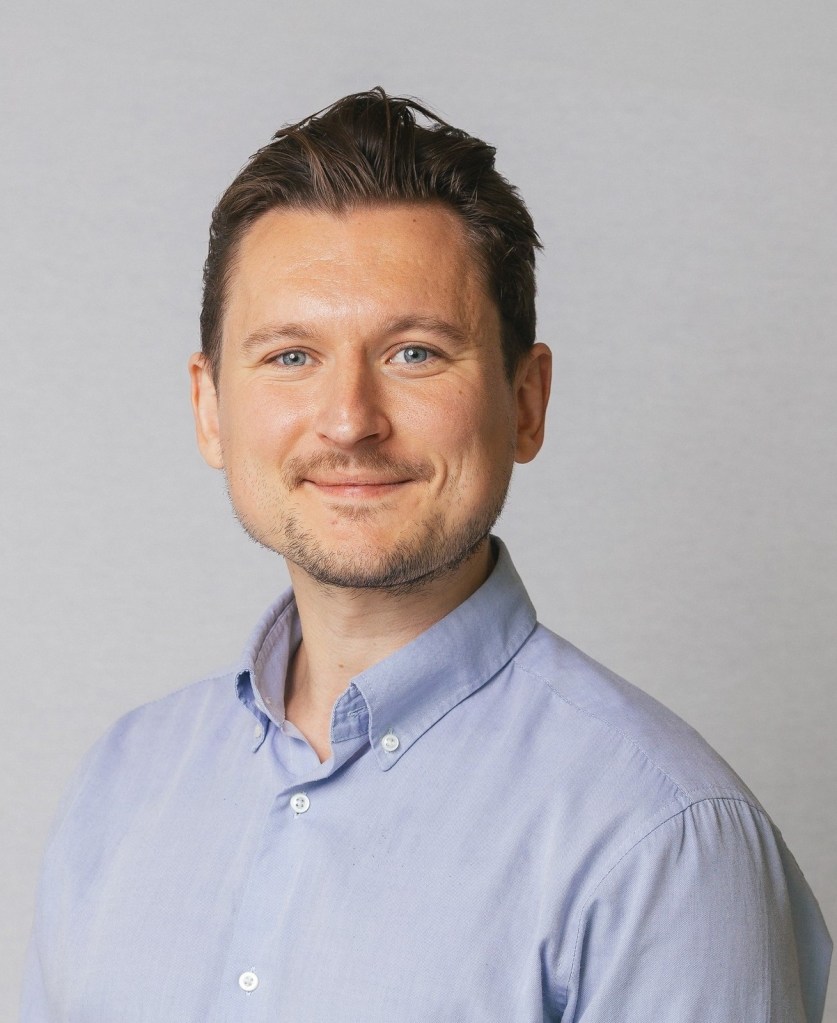
Involving individuals with lived experience is increasingly being recognised as important in the study of psychopathology. In recognition of the value of collaborating with experts by experience, international funders are increasingly mandating that mental health research is developed by teams that include individuals from the population of study.
Yet, there is limited understanding of how to implement Patient and Public Involvement (PPI), including co-production and co-design, in fields such as computational psychiatry. Further, there is heterogeneity in how such methods are implemented and reported, limiting reproducibility. In this session, I will outline finings of a scoping review examining how PPI methods are implemented in mental health research, providing a practical introduction into how these methods can be adopted in computational psychiatry. I will also briefly outline emerging findings from a Delphi study into facilitators and barriers to diversity in PPI, which can help to ensure experts by experience who collaborate on research reflect the diversity of populations that experience mental health problems.
Kelly Donegan, Mobile and online app data

Digital methods such as online surveys, repeated tracking of mood/behaviour through ecological momentary assessments and smartphone-based cognitive games have transformed how we can study mental health in everyday life. By meeting participants where they are, these approaches offer a seamless way to study behaviour where it naturally occurs, through time, and reach populations that are often underrepresented in traditional lab-based research.
However, these methods also introduce a distinct set of methodological challenges: high drop-out rates and missing data, concerns about data quality and genuine engagement, complex longitudinal data structures and the practical demands of managing live data pipelines.
The first half of this workshop will introduce the landscape of online and mobile data collection in mental health research. In the second half, we will discuss and work through challenges facing both the researchers and the participants in the implementation of these approaches, exploring practical strategies for maintaining the quality and integrity of the data we collect online.
Nura Sidarus, EDI in research
The goal of this panel is to provoke reflection and promote action on how we can all work to make our research more inclusive and diverse. We will consider how EDI issues impact our research workplaces and cultures, namely through inequalities in representation, or the impact that has on the experiences of researchers.
Thursday
Dan Goodman, NeuroAI

Dr Dan Goodman an Associate professor in the Intelligent Systems and Networks group in the Department of Electrical and Electronic Engineering at Imperial College London.
Rui Ponte Costa, Biologically-inspired AI models
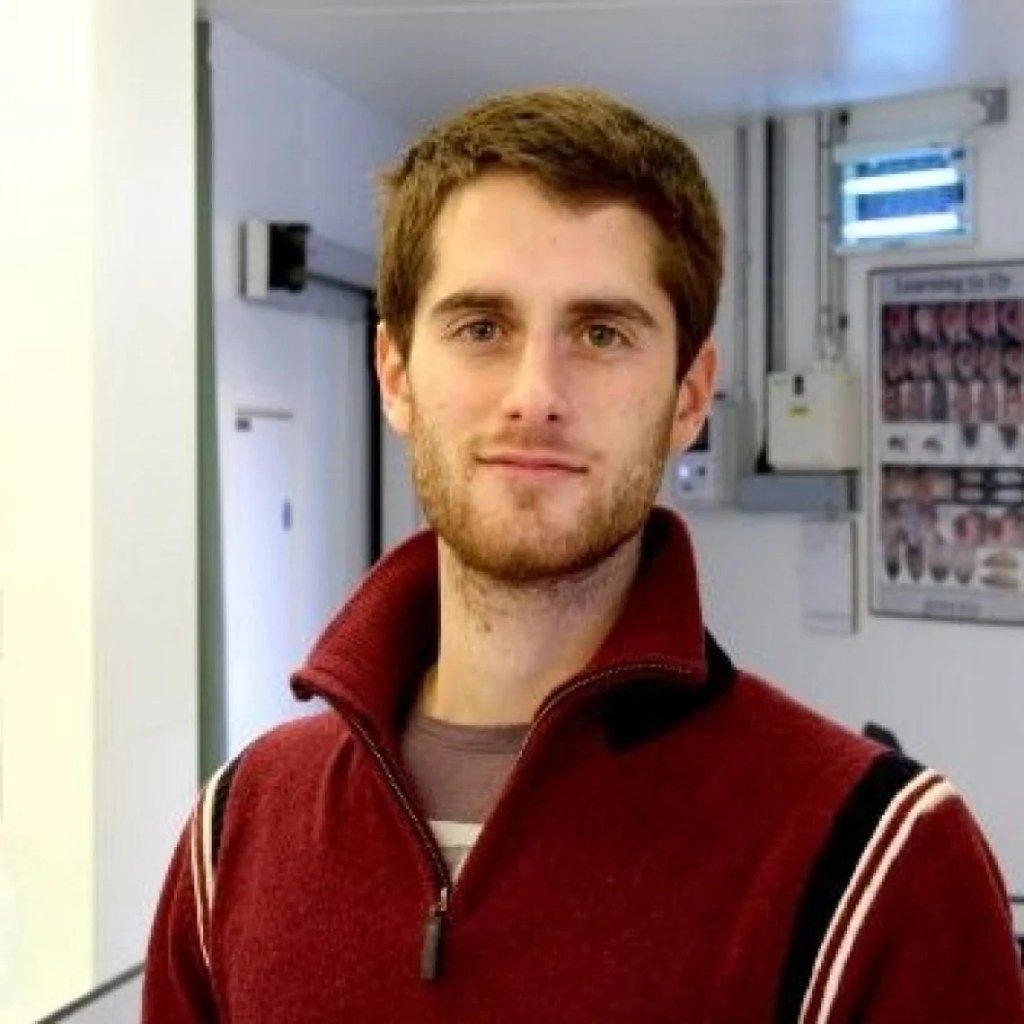
Dr Rui Ponte Costa is an Associate Professor at the University of Oxford, and leads the Neural & Machine Learning group that leverages AI principles to develop a new generation of computational models of learning in the brain.
Anand Subramoney, Neuromorphic Machine Learning
Dr Anand Subramoney is a Lecturer (Assistant Professor) in the Department of Computer Science at Royal Holloway, University of London. He is broadly interested in learning and intelligence, both algorithmic and biological.
Leo Nguyen, Training Spiking Neural Networks

Leo Nguyen is a PhD student at Royal Holloway, University of London.
TBA, TBA
TBA
Friday
Nicola Wen, Rituals in Childhood: Social Transmission and the Evolution of Group Dynamics
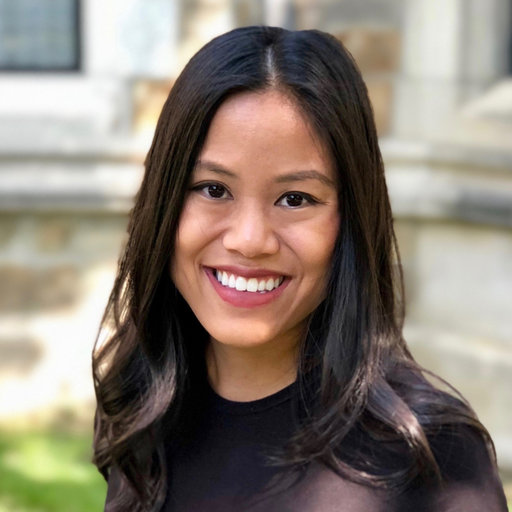
Studying the emergence of rituals in childhood provides insight into the complex dynamics of social group cognition. This talk will examine how children identify and acquire ritual to affiliate with social groups and preliminary work uncovering the relationship between ritual and cooperation in development.
Insights within and across populations are drawn from diverse methodologies, including behavioral experiments, multivocal ethnography, and group paradigms. The results illuminate a deep-rooted proclivity towards in-group preference, suggesting rituals as pivotal mechanisms fostering group cohesion. I posit that humans are psychologically prepared to engage in ritual, serving as a means for in-group affiliation and inclusion.
Monica Tamariz, An evolutionary theory of culture

TBA
Roman Miletitch, Modeling language evolution with swarm robotics

Swarm robotics, the study of collective behavior in groups of robots, offers a physically grounded way to model how language and communication can emerge from decentralized interactions. The workshop begins with a lecture introducing swarm dynamics, language emergence, and the ARGoS simulator.
This is followed by a live coding demo in which we build a simple swarm behavior together, guided by participants’ ideas. In the hands-on session, participants will work with a prepared simulation environment, documentation, and starter code to design their own robotic behaviors and experimental setups for exploring language evolution.
EDI in Research
Panel
Nura Sidarus, Chair
Nura Sidarus is a Lecturer, leading the Computations in Agency and Metacognition Lab and chairing the EDI Psychology team at Royal Holloway, University of London. She is also an affiliated member of the Neuroscience of Mental Health group at the Institute of Cognitive Mental Health at University College London.
 center-decision-sciences.com