
Welcome to the Center for Decision Sciences at Royal Holloway, University of London
Our aim is to support and advance interdisciplinary research into decision mechanisms with a particular focus on important social challenges.

Mission Statement
Our strategic vision for the Centre is to forge synergies with other subdisciplines of psychological sciences as well as other cognate disciplines within the University. The Centre will act as a catalyst for providing the unique mechanistic insights that cognition and neuroscience can offer into the understanding of behavior and decision-making in a variety of contexts.
Discussion
Create the intellectual space to enable open discussion and debate regarding how our research can become more relevant for understanding the role and mechanisms of decision-making in the context of timely societal issues.
Training
Organize interdisciplinary training for colleagues and early career researchers in the neuropsychological and computational sciences.
Collaboration
Capitalize on the expertise and breadth of our neuroimaging researchers to attract colleagues from our department and a variety of others to foster cross-disciplinary collaborations.
Events
Create various events focused on teaching the new generation of scientists (Summer School), and crossing disciplinary boundaries in knowledge exchange (Conferences).
Awareness
Highlight the social impact of our research by raising awareness more broadly and engage non-academic partners in this endeavor.
Impact
Host initiatives and collaborate with institutions to reach a wider audience for impactful decision science research.
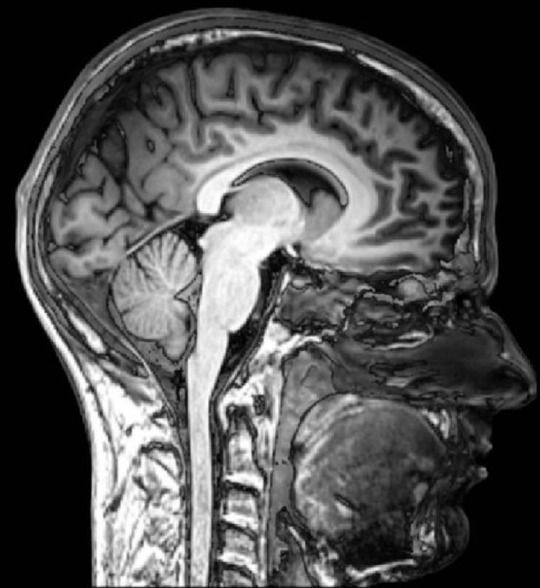
“Decisions are at the core of every human activity, and understanding the ways in which people make decisions is becoming ever more important in the light of current global challenges encompassing climate, education and learning, health, finance and politics.”
Seminar Series
Mateusz Wozniak, How decision-making autonomy influences cognition in human-robot cooperation (21/05/25)
Using a robot can present a situation that falls between using a tool, embodying an artificial body, and interacting with another person. I will present a series of our recent studies investigating how operating a robot characterized by different forms and levels of decision-making autonomy can influence cognition and behaviour, with a focus on sense of control and trust, as well as our preliminary EEG results.
Julia Christensen, ‘I just lost it!’ Volition and control in law and in brain science (14/05/25)
The law assumes that healthy adults are generally responsible for their actions and have the ability to control their behaviour based on rational and moral principles. This contrasts with some recent neuroscientific accounts of action control as strongly biased. I present a short overview of laboratory experiments, in which we measured sense of agency, as participants performed actions while they were in either an emotionally neutral state, in a fearful or angry state. We found that fear or anger reduced the subjective sense of control over an action outcome, even though the objective causal link between action and outcome remained the same. This gap between the objective facts of agency and a reduced subjective experience of agency under emotional conditions has important implications for society and law. I further outline the neuroscientific evidence for such legal classifications of responsibility, focussing on how emotional states modulate voluntary motor control in the brain.
Łukasz Okruszek, Do Lonely Minds See Snakes All the Time?
An Investigation of Social Threat Hypervigilance
in Loneliness Across Levels of Analysis (02/04/25)
Loneliness is recognized as a major public health concern. The influential Evolutionary Theory of Loneliness (ETL) posits that social threat hypervigilance (STH) is a key mechanism underlying the long-term sequelae of chronic loneliness. However, evidence for STH in loneliness remains inconsistent. To address this, we conducted a series of studies examining the association between loneliness and STH using self-report, behavioural, ecological, neurophysiological, and neuroimaging methods. Our findings suggest that while STH may be evident in subjective reports, it does not consistently manifest across other levels of analysis in lonely individuals. Potential explanations for this discrepancy will be discussed.
Akilles Redchardt, Simulating Neural Damage: Understanding Changes in Visual Category Representations in Healthy Ageing (26/03/25)
Distinct concepts and categories produce separable patterns of brain activation detectable through imaging techniques such as fMRI—for example, seeing an object evokes a different neural response than a face. However, healthy aging reduces the selectivity of these activations in older adults, known as neural dedifferentiation. Activation patterns for categories become more alike, correlating with cognitive decline. I use computational modelling with deep-learning vision models to simulate localized damage in the ventral visual stream, exploring how different forms of damage could drive age-related neural dedifferentiation. I will discuss the effects of different types of damage in varying parts of the visual network and how this type of modelling could be used to explain fMRI data.
Joe Barnby, A self divided cannot stand – A computational approach to
understanding social generalisation and integration in health and disorder (12/03/25)
Interpersonal relationships are a fundamental aspect of being a social animal. Humans can effortlessly form rich impressions of others from minimal information, even before direct interaction. A key question is how this complex representation arises so easily, and why, for some individuals, sparse data can trigger psychological distress or disability. Traditional approaches have linked general learning models with psychometric data to address this question, but these methods risk oversimplification, leaving the mechanisms of social cognition underspecified. In this work, I present a computational approach to self-other information generalization that distinguishes between self-to-other, other-to-self information transfer, and observational learning. Using data from teenagers, adults, and patients with borderline personality disorder and psychosis, I demonstrate that self-other integration evolves with age and plays a critical role in social navigation. Disruptions in this process can contribute to psychiatric symptoms. I also discuss the utility of this computational framework for AI, experimental psychology, and computational psychiatry, and how it may intersect with other facets of social cognition such as metacognition and hierarchical reasoning.
Contact Us
Gabriele Bellucci,
Director of the Centre for Decision Sciences
Gabriele.Bellucci@rhul.ac.uk
Instagram: RHUL Psychology (@rhulpsych) • Instagram photos and videos
 center-decision-sciences.com